The main fenugreek benefits for men that have been tested in trials are a modest rise in testosterone and better sexual function scores. The evidence is real but thin.
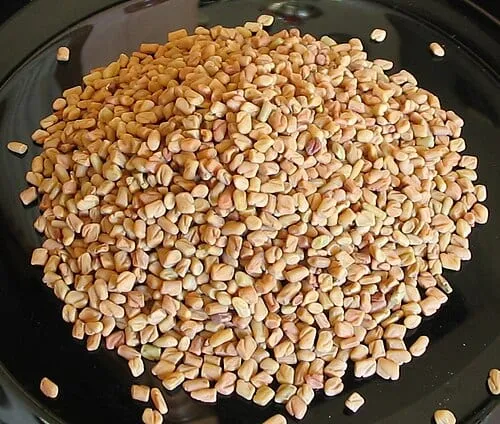
Fenugreek (Trigonella foenum-graecum) is a clover-like herb. Its seeds smell and taste like maple syrup and have been used as a spice and a traditional medicine.[6] Booster supplements use a concentrated extract of the seed, not the spice from your kitchen cupboard.

Does fenugreek increase testosterone?
The pooled analysis
A 2020 meta-analysis searched for randomised clinical trials that compared fenugreek extract with a control group and measured total testosterone. Four trials qualified. When their results were combined, fenugreek extract had a significant effect on total testosterone in men.[1]
Four trials is a small number. A pooled result built on so few studies can shift when new trials are added.
Healthy men aged 43 to 70
The largest single trial was published in 2016. It was double-blind and placebo-controlled, and it enrolled 120 healthy men aged 43 to 70. Half took 600 mg a day of a standardised fenugreek seed extract for 12 weeks.[2]
Compared with placebo, the fenugreek group had:[2]
- a larger drop in scores on a questionnaire about symptoms linked to low testosterone
- better sexual function, including more morning erections and more frequent sexual activity
- higher total and free testosterone after 12 weeks.
Men aged 25 to 52
An earlier trial by some of the same researchers gave 60 healthy men aged 25 to 52 either 600 mg a day of the same branded extract, combined with minerals, or a placebo for 6 weeks.[3]
Men taking the extract reported improvements in sexual arousal and orgasm, and in satisfaction with muscle strength, energy and wellbeing. It had no effect on mood or sleep.[3]
Testosterone tells a quieter story here. The published summary says only that testosterone and prolactin stayed within the reference range.[3] Helping to maintain normal testosterone is a weaker claim than raising it.
Men doing weight training
A 2016 pilot trial randomised 60 healthy men to take 300 mg of a fenugreek glycoside extract twice a day, or a placebo, during an 8-week supervised weight-training programme. The fenugreek group showed changes in testosterone and body fat that the authors described as significant compared with placebo.[4] For what training does by itself, see does working out increase testosterone?
Where the wider reviews land
A 2021 systematic review of herbs and testosterone named fenugreek seed extract as one of two herbal extracts with positive effects on testosterone in men. The other was ashwagandha. The same review cautioned that only 6 of the 32 herbal trials it found had a low risk of bias.[5]
A wider 2024 review concluded that most testosterone boosters fail.[7] We summarise it in do testosterone boosters work? Among other herbs, tongkat ali has similar early evidence, and tribulus terrestris does not.
What are the fenugreek benefits for women?
The testosterone trials above were all in men. For women, the US National Center for Complementary and Integrative Health reports that:[6]
- studies of fenugreek to increase milk supply in breastfeeding women have had mixed results
- the evidence on menstrual cramps is of low quality, and the effects are uncertain
- fenugreek is not safe during pregnancy in amounts greater than those found in food.
Women who are worried about hormone levels will find more in low testosterone in women.
Fenugreek seed tea, powder or extract?
The trials tested concentrated, standardised extracts in capsules.[2, 3, 4] Nobody has tested whether fenugreek seed tea, or ground seed used in cooking, affects testosterone. Fenugreek as a spice is a normal part of many diets. It just should not be confused with what was studied. Our guide to foods that boost testosterone looks at what diet can and cannot do.

What doses of fenugreek were studied?
- 600 mg a day of standardised seed extract for 6 weeks and for 12 weeks.[2, 3]
- 300 mg twice a day of a glycoside extract for 8 weeks alongside weight training.[4]
Each of these trials tested one company’s standardised extract. Results may not carry over to other extracts or to a blend that contains a smaller amount. These are study doses, not recommendations.
Limits of the evidence
- Few trials. The pooled analysis rests on four.[1]
- Branded extracts. The main trials tested specific commercial products.[2, 3]
- Inconsistent testosterone results. One trial reported a rise. Another reported only that levels stayed normal.[2, 3]
- Healthy volunteers. The trials were in healthy men, not men diagnosed with low testosterone.[2, 3, 4]
- Questionnaires. Several of the benefits were self-reported, which makes them more open to placebo effects.
Is fenugreek safe? Side effects and warnings
The US National Center for Complementary and Integrative Health says:[6]
- Possible side effects include diarrhoea, nausea and other digestive symptoms.
- Large doses may cause a harmful drop in blood sugar.
- Fenugreek can cause allergic reactions in some people.
- Fenugreek is not safe during pregnancy in amounts greater than those found in food. Its use has been linked to an increased risk of birth defects.
- Little is known about whether amounts larger than those in food are safe while breastfeeding.
Take extra care if you have diabetes or take medicine that lowers blood sugar, because fenugreek may lower it further.[6] Talk to a doctor or pharmacist first if you take any regular medicine. Our guide to testosterone booster side effects covers the wider risks of supplement blends.
The bottom line
Fenugreek extract has a positive pooled analysis and one reasonably sized trial behind it, and it may help sexual function scores in middle-aged men. The evidence is still thin, tied to branded extracts, and not fully consistent on testosterone itself. We rate it “some evidence”. It is not a treatment for diagnosed low testosterone, so if you have symptoms, read low testosterone symptoms first.
Common questions
What are the benefits of fenugreek for men?
The best-supported ones are a modest rise in testosterone and better scores on sexual function questionnaires in middle-aged men, based on a handful of trials of branded seed extracts.[1, 2] There is not enough high-quality evidence for most other claimed uses.[6]
Does fenugreek increase testosterone?
A 2020 meta-analysis of four randomised trials found a significant effect on total testosterone in men.[1] Results were not fully consistent between trials.[3]
What are the benefits of fenugreek for women?
The evidence is weak. The US National Center for Complementary and Integrative Health says studies of fenugreek for breast milk supply have had mixed results, and the evidence for menstrual cramps is of low quality. It is not safe in pregnancy in amounts greater than those found in food.[6]
Sources
- Effect of fenugreek extract supplement on testosterone levels in male: A meta-analysis of clinical trials (Mansoori et al., 2020) Phytotherapy Research
- Testofen, a specialised Trigonella foenum-graecum seed extract reduces age-related symptoms of androgen decrease, increases testosterone levels and improves sexual function in healthy aging males in a double-blind randomised clinical study (Rao et al., 2016) The Aging Male
- Physiological aspects of male libido enhanced by standardized Trigonella foenum-graecum extract and mineral formulation (Steels et al., 2011) Phytotherapy Research
- Beneficial effects of fenugreek glycoside supplementation in male subjects during resistance training: A randomized controlled pilot study (Wankhede et al., 2016) Journal of Sport and Health Science
- Examining the Effects of Herbs on Testosterone Concentrations in Men: A Systematic Review (Smith et al., 2021) Advances in Nutrition
- Fenugreek: Usefulness and Safety National Center for Complementary and Integrative Health (NIH)
- Do "testosterone boosters" really increase serum total testosterone? A systematic review (Morgado et al., 2024) International Journal of Impotence Research
Part of our testosterone guides. New here? Start with do testosterone boosters work?