Foods that boost testosterone are a popular search, but no single food has been shown to do it. What the research supports is narrower: not being short of key nutrients, not eating a very low-fat diet, and not carrying excess weight.[1, 6, 7]
This guide goes through the foods people ask about most, and says plainly where the evidence stops.
Can food really boost testosterone?
Only a little, and mostly by removing a problem.
Diet affects testosterone in three ways that have some evidence behind them.
- Correcting a shortage. A man who is short of zinc can see his testosterone recover when the shortage is fixed.[7]
- The overall pattern. Very low-fat and very high-protein diets have lowered testosterone in studies.[1, 2]
- Body weight. Losing excess weight raises testosterone, and this effect is larger than anything a single food can do.[6]
None of this means a food can push a healthy level higher. The same is true of supplements, as we explain in do testosterone boosters work?
Do oysters boost testosterone?
Oysters are the best-known “testosterone food”, and the reason is zinc. Shellfish such as oysters, crab and lobster are rich in it.[9]
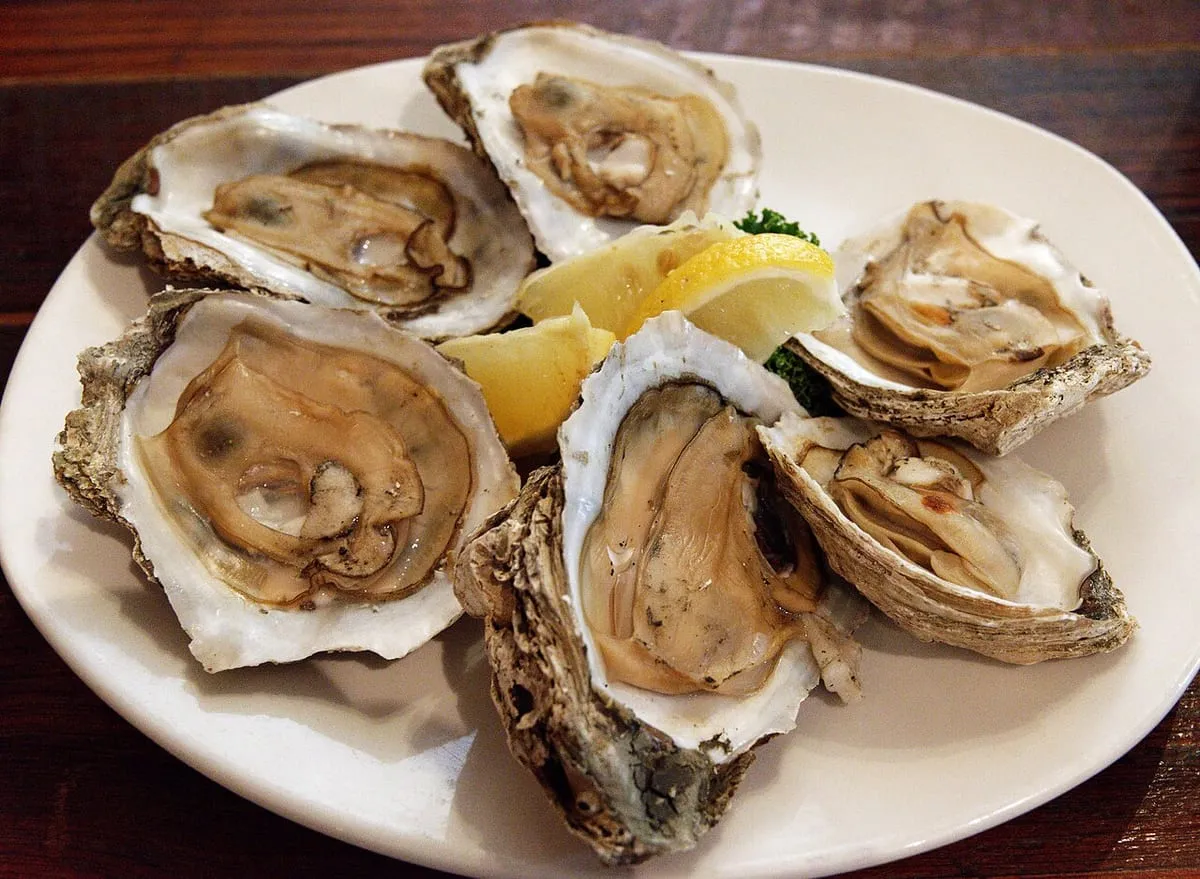

The link between zinc and testosterone is real, but it has limits.
- In four young men, restricting zinc in the diet for 20 weeks cut testosterone from 39.9 to 10.6 nmol/L.[7]
- In nine older men who were marginally zinc deficient, 3 to 6 months of zinc supplements raised it from 8.3 to 16.0 nmol/L.[7]
- In men who already got enough zinc, a zinc and magnesium supplement made no difference to testosterone.[16]
So oysters can help a man whose diet is low in zinc. They will not raise testosterone in a man who already gets enough. No trial has tested oysters themselves.
Full details are in zinc and testosterone.
Other zinc-rich foods
You do not need oysters to get zinc. MedlinePlus and Harvard’s nutrition department list these sources.[8, 9]
- Meat. Beef, pork and lamb contain more zinc than fish. The dark meat of a chicken has more than the light meat.
- Shellfish. Oysters, crab and lobster.
- Nuts and seeds.
- Whole grains and legumes. These contain zinc, but also compounds called phytates that reduce how much is absorbed.
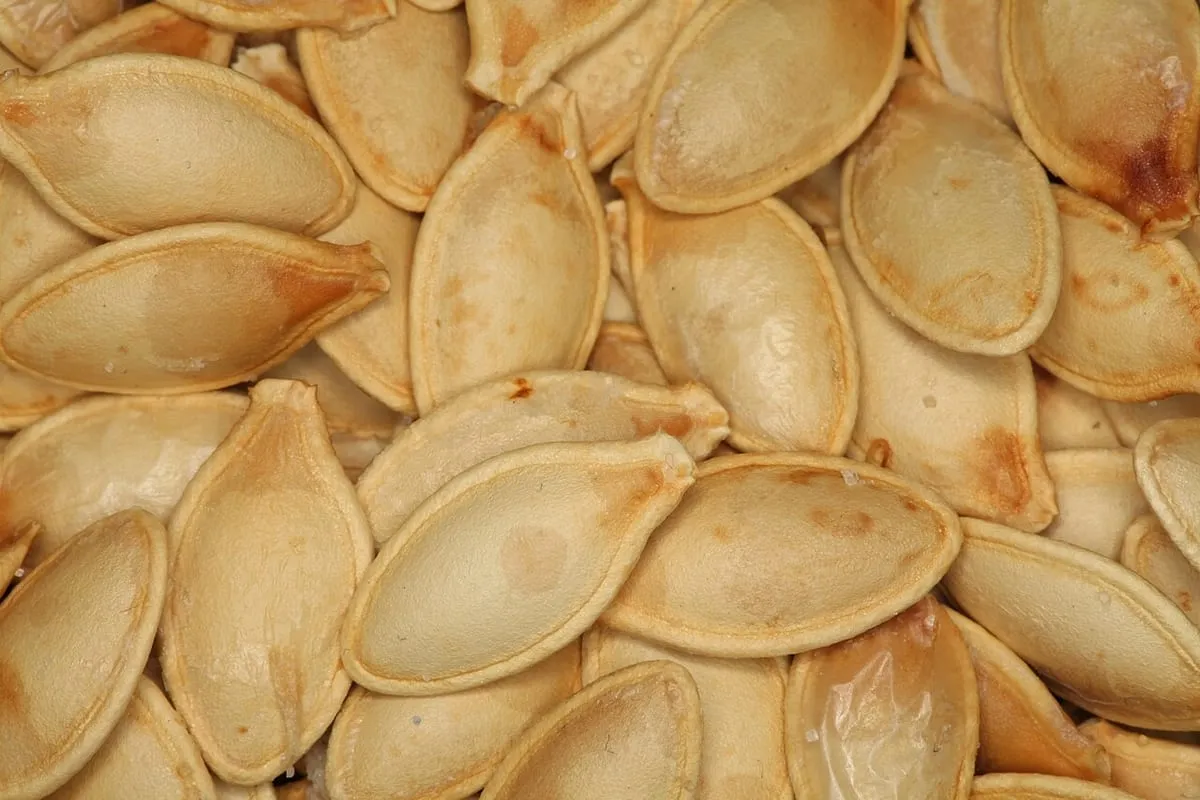

Fruit and vegetables are not good sources, because the zinc in plant foods is less available to the body.[8] That makes zinc worth a thought if you eat little or no meat.
US guidance sets the recommended amount for men at 11 mg a day.[8] The NHS says you should be able to get all the zinc you need from a varied and balanced diet.[10]
Which other nutrients matter?
Magnesium
Magnesium is found in spinach, nuts and wholemeal bread.[10] In a study of 399 men aged 65 and over, higher blood magnesium went with higher testosterone, but that is a link and not proof of cause.[15] See magnesium and testosterone.
Vitamin D
The body makes vitamin D when skin is exposed to sunlight. Fatty fish such as tuna, salmon and mackerel are among the best food sources.[11] Taking extra has not helped testosterone: a 2019 meta-analysis of eight trials found no clear effect of vitamin D supplements.[14] See vitamin D and testosterone.
Boron and fenugreek
Boron and fenugreek both turn up in lists of testosterone foods. The research on them used supplements and extracts, not food. We cover what was actually tested in boron and testosterone and fenugreek and testosterone.
Does the amount of fat in your diet matter?
It seems to, a little.
A 2021 meta-analysis pooled 6 intervention studies with 206 men. Low-fat diets produced small but significant decreases in total testosterone, free testosterone and DHT, compared with higher-fat diets. The effect looked stronger in men of European ancestry.[1]
The authors were careful: low-fat diets appear to decrease testosterone, and more randomised trials are needed to confirm it.[1]
The practical reading is modest. There is no evidence here that eating extra fat raises testosterone. The finding is that cutting fat very low may lower it slightly.
Does a high-protein diet lower testosterone?
Only at extremes that few people reach.
A 2022 meta-analysis of 27 studies with 309 men looked at low-carbohydrate diets.[2]
- Low-carbohydrate diets with moderate protein had no consistent effect on resting testosterone.
- Low-carbohydrate diets with high protein (35% or more of energy) lowered resting total testosterone by about 5.23 nmol/L.
The authors later clarified what “high” means. The fall applies to very high protein intakes, above 3.4 g per kg of body weight a day. Average intake is about 1.3 g per kg, and conventional high-protein diets are about 1.8 to 3 g per kg. Intakes from 1.25 to 3.4 g per kg do not appear to lower testosterone.[3]
So ordinary high-protein eating, including for weight training, is not a concern.
Does soy lower testosterone?
No. This is one of the most thoroughly tested food claims.
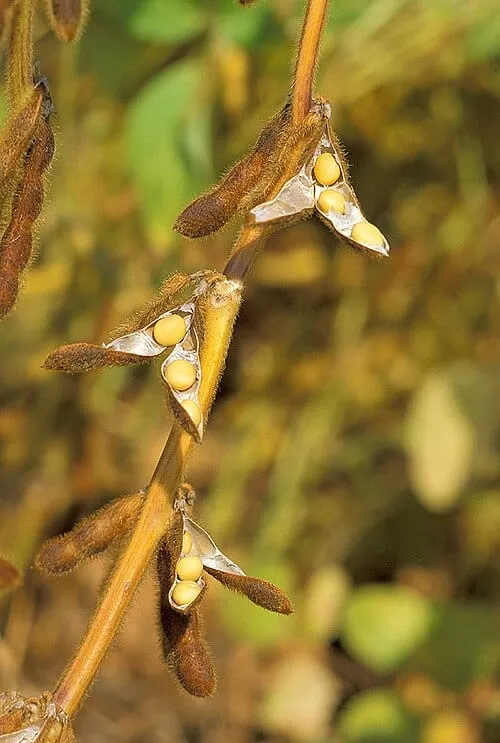

A 2021 meta-analysis covered 41 clinical studies. Total testosterone was measured in 1,753 men and free testosterone in 752. Neither soy protein nor soy isoflavones had a significant effect on total testosterone, free testosterone or oestrogen levels. Dose and study length made no difference.[4]
Do meat and fish matter?
There is a small signal from population data. Among 208,677 UK men aged 40 to 69, eating poultry or fish was associated with higher testosterone, and eating little red meat with lower testosterone.[12]
This is an observational finding. Men who eat differently also differ in weight, activity and health, so it cannot show that the food caused the difference. In the same study, body mass index had a clear effect of its own.[12]
Which diet is best for testosterone if you are overweight?
The one that helps you lose weight and that you can keep to.
- A meta-analysis of 24 studies found that a low-calorie diet raised total testosterone by an average of 2.87 nmol/L. Men who lost more weight saw bigger rises.[6]
- A 2026 systematic review of 52 studies in obese men estimated a rise of about 3 nmol/L for every 10 kg lost, across different diets.[5]
- In that review, very-low-calorie ketogenic diets had the most consistent evidence, with rises of 1.5 to 3.0 nmol/L in randomised trials. Evidence for the Mediterranean diet’s effect on testosterone was limited, though the authors noted its benefits for the heart.[5]
The reviewers saw weight loss as the common factor behind all of these diets.[5] We explain why in testosterone and weight gain.
What about alcohol?
Heavy or long-term drinking lowers testosterone, according to a 2023 review of the research.[13] The detail is in how to increase testosterone naturally.
What does a sensible meal plan look like?
There is no tested “testosterone meal plan”. Putting the evidence above together gives a short list.
- Eat enough zinc-containing foods: meat, shellfish, nuts, seeds and whole grains.[8, 9]
- Do not cut fat very low.[1]
- Keep protein within normal high-protein limits.[3]
- Do not avoid soy on testosterone grounds.[4]
- If you are overweight, eat in a way that brings your weight down.[6]
- Keep alcohol moderate.[13]
That is ordinary healthy eating. It is also all that the evidence supports.
If you have symptoms of low testosterone, food is unlikely to be the answer on its own. See low testosterone symptoms.
The bottom line
No food boosts testosterone in a man who is healthy and well nourished. Oysters and other zinc-rich foods help only where zinc is short. Very low-fat and extremely high-protein diets may lower testosterone, soy does not, and losing excess weight raises it more than any food choice. Eat a varied diet and treat “testosterone superfoods” with scepticism.
Common questions
What foods increase testosterone?
No food has been shown to raise testosterone on its own. Foods rich in zinc, such as shellfish, meat, nuts and seeds, help only if your diet is short of zinc.[7, 9]
Do oysters boost testosterone?
Oysters are rich in zinc.[9] In a small study, zinc supplements raised testosterone in older men who were marginally zinc deficient.[7] No trial has tested oysters themselves.
Does soy lower testosterone?
No. A meta-analysis of 41 clinical studies found that neither soy protein nor soy isoflavones affected total or free testosterone in men, whatever the dose or duration.[4]
Does a high-protein diet lower testosterone?
Only at extreme intakes. A fall of about 5.23 nmol/L was seen with very high protein diets above 3.4 g per kg of body weight a day. Intakes of 1.25 to 3.4 g per kg do not appear to lower it.[2, 3]
Do low-fat diets lower testosterone?
Slightly. A meta-analysis of 6 intervention studies in 206 men found small but significant decreases in total and free testosterone on low-fat diets compared with higher-fat diets.[1]
Sources
- Low-fat diets and testosterone in men: Systematic review and meta-analysis of intervention studies (Whittaker and Wu, 2021) The Journal of Steroid Biochemistry and Molecular Biology
- Low-carbohydrate diets and men's cortisol and testosterone: Systematic review and meta-analysis (Whittaker and Harris, 2022) Nutrition and Health
- High-protein diets and testosterone (Whittaker, 2023) Nutrition and Health
- Neither soy nor isoflavone intake affects male reproductive hormones: An expanded and updated meta-analysis of clinical studies (Reed et al., 2021) Reproductive Toxicology
- Dietary Interventions and Testosterone Levels in Obese Men: A Systematic Review Comparing the Mediterranean Diet, Ketogenic Diet, and Intermittent Fasting (La Vignera and Condorelli, 2026) Nutrients
- Body weight loss reverts obesity-associated hypogonadotropic hypogonadism: a systematic review and meta-analysis (Corona et al., 2013) European Journal of Endocrinology
- Zinc status and serum testosterone levels of healthy adults (Prasad et al., 1996) Nutrition
- Zinc in diet MedlinePlus, US National Library of Medicine
- Zinc and Your Health The Nutrition Source, Harvard T.H. Chan School of Public Health
- Vitamins and minerals: Others NHS
- Vitamin D MedlinePlus, US National Library of Medicine
- Sociodemographic, lifestyle and medical influences on serum testosterone and sex hormone-binding globulin in men from UK Biobank (Yeap et al., 2021) Clinical Endocrinology
- The effects of alcohol on testosterone synthesis in men: a review (Smith et al., 2023) Expert Review of Endocrinology & Metabolism
- The effect of vitamin D supplementation on the androgenic profile in men: A systematic review and meta-analysis of clinical trials (Hosseini Marnani et al., 2019) Andrologia
- Magnesium and anabolic hormones in older men (Maggio et al., 2011) International Journal of Andrology
- Serum testosterone and urinary excretion of steroid hormone metabolites after administration of a high-dose zinc supplement (Koehler et al., 2009) European Journal of Clinical Nutrition
Part of our testosterone guides. New here? Start with do testosterone boosters work?