Magnesium and testosterone are linked in one study of older men, but whether taking magnesium raises testosterone is unproven.
Magnesium is a mineral the body needs every day. It appears in booster blends by itself and as part of ZMA, a mix of zinc and magnesium aimed at people who train. The case for it as a testosterone booster is built on two studies. Neither is strong enough to carry it.
How much magnesium do you need?
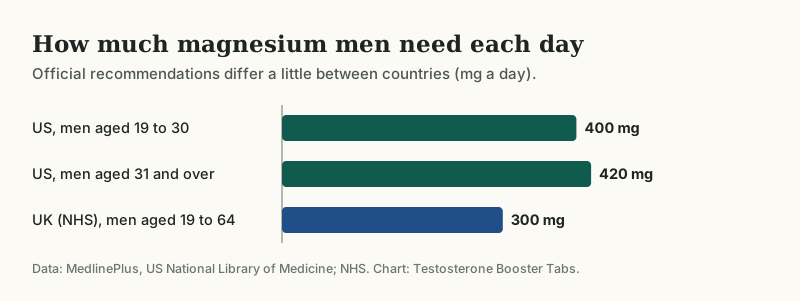
- The US recommended amount for men is 400 mg a day from age 19 to 30 and 420 mg a day from 31.[7]
- The NHS in the UK gives a figure of 300 mg a day for men aged 19 to 64.[8]
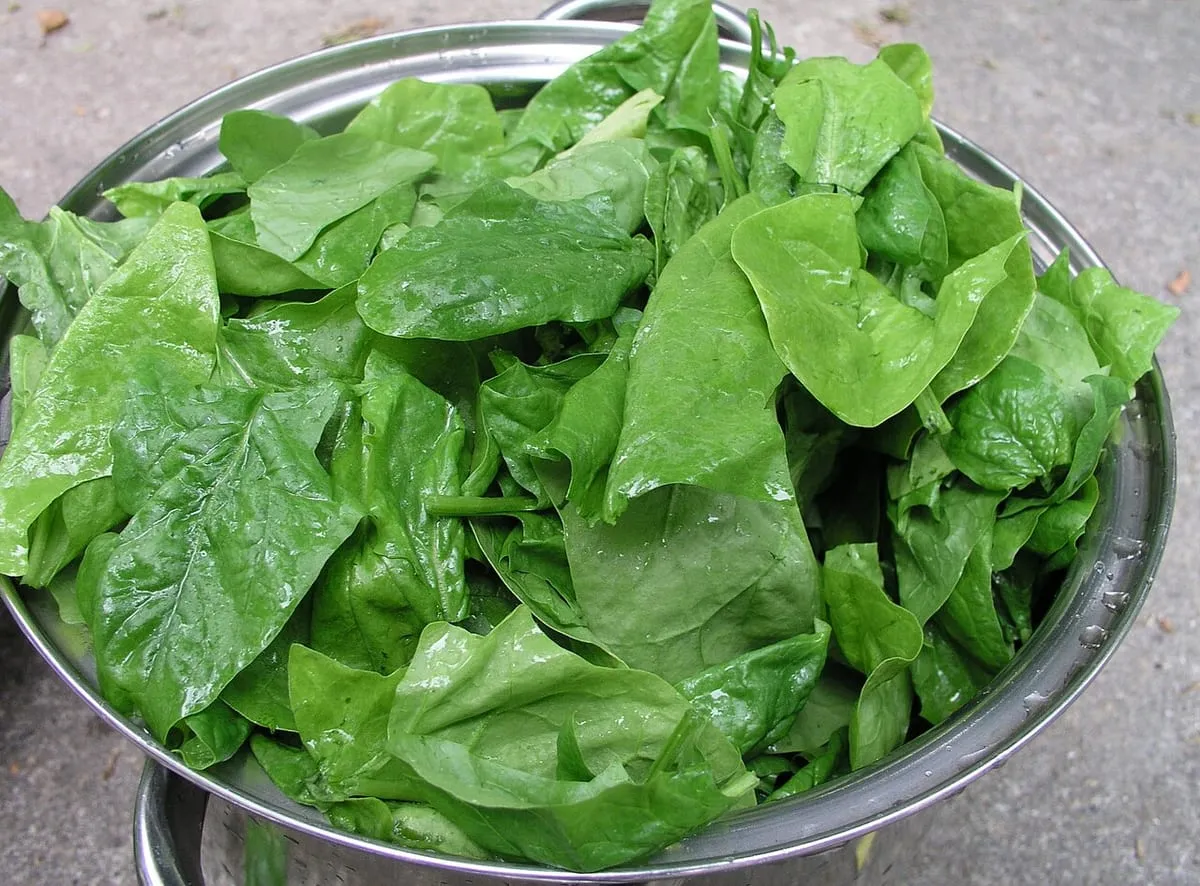
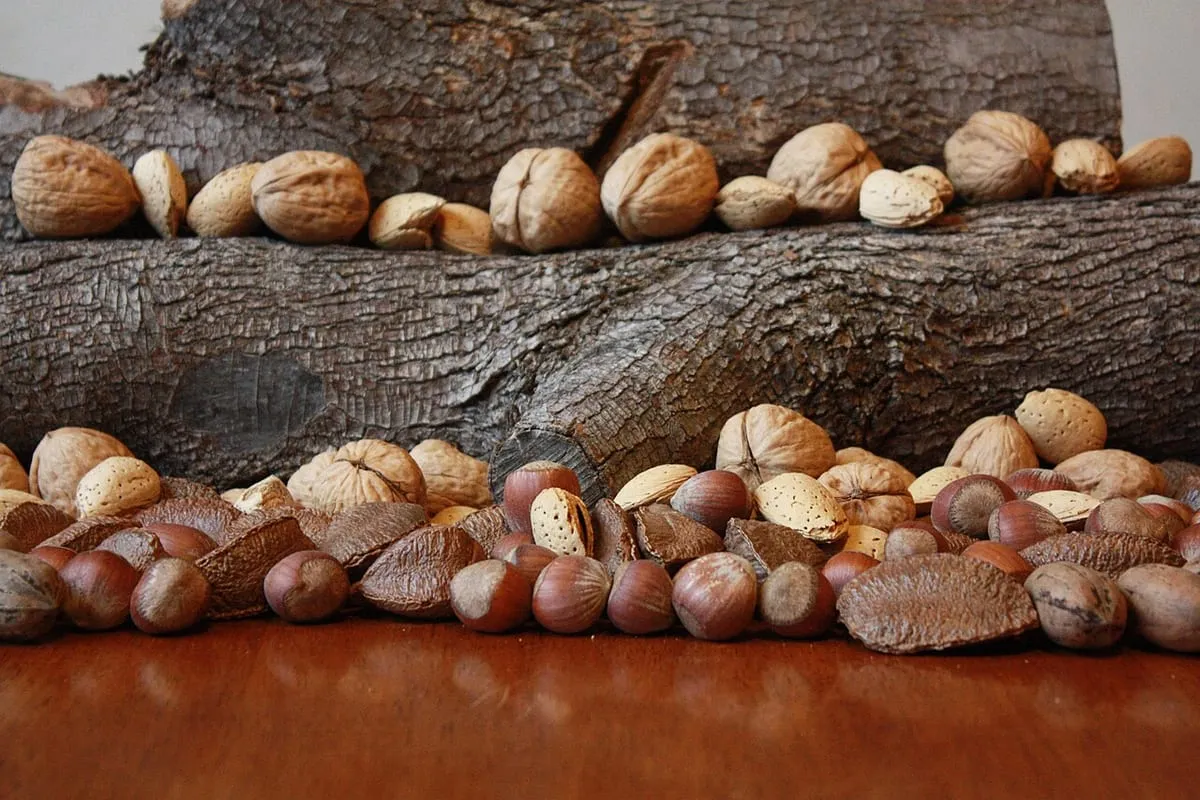
Magnesium is found in a wide range of foods, including spinach, nuts and wholemeal bread. The NHS says you should be able to get all you need from a varied and balanced diet.[8]

Does magnesium increase testosterone? The human studies
The link in older men
A 2011 study looked at 399 men aged 65 and over in Tuscany, Italy. Researchers measured magnesium and several hormones in their blood.[1]
Men with higher magnesium levels had higher total testosterone. The relationship held after the researchers adjusted for age, body mass index and a list of other factors.[1]
This is an observational study. It shows that the two go together. It cannot show that one causes the other. Healthier, more active men who eat better may simply have more of both.
The supplement trial
Also in 2011, a small trial tested magnesium directly. It had three groups:[2]
- Sedentary men who took 10 mg of magnesium per kg of body weight a day.
- Tae kwon do athletes who trained 90 to 120 minutes a day and took the same dose.
- Tae kwon do athletes who trained and took no magnesium.
After 4 weeks, the researchers reported that magnesium increased free and total testosterone in both the sedentary men and the athletes. The rise was larger in those who exercised.[2]
The weakness is in the design. The published summary describes no placebo, and there was no sedentary group without magnesium to compare against. It also does not say how many men took part.[2] Exercise has its own short-lived effect on hormones, which we cover in does working out increase testosterone?
ZMA trials
ZMA is the form in which many people who train take magnesium. Two controlled trials tested it.
- In 14 healthy men who exercised regularly and already ate enough zinc, ZMA produced no significant change in total or free testosterone.[3]
- In 42 weight-trained men, 8 weeks of ZMA made no significant difference to anabolic hormones, body composition or strength compared with placebo.[4]
These trials tested a blend, so they do not isolate magnesium. But if magnesium reliably raised testosterone in men who train, ZMA should have shown it. The zinc half of the blend is covered in does zinc increase testosterone?
The wider review
A 2024 systematic review of testosterone boosters included five studies of zinc and magnesium. It concluded that most boosters fail to raise total testosterone, and neither mineral was among the few ingredients it rated as effective or possibly effective.[5] See do testosterone boosters work? for the full picture.
What dose of magnesium was used in the trial?
The supplement trial used 10 mg per kg of body weight a day for 4 weeks.[2] For an 80 kg man, that is 800 mg a day, about double the US recommended daily amount from all sources.[7]
That is a study dose, not a recommendation. It is also above the level at which the NHS warns of side effects.[8]
Is magnesium safe? Side effects of too much
The NHS says that taking more than 400 mg of magnesium for a short time can cause diarrhoea, and that there is not enough evidence to say what the effects of taking high doses for a long time might be.[8]
Booster products can contribute more than you expect. In a study of 50 testosterone booster supplements, 13 exceeded official upper limits for zinc, vitamin B3 or magnesium.[6] Our guide to testosterone booster side effects has more on overdoing vitamins and minerals.
Talk to a doctor or pharmacist first if you have kidney disease or take regular medicines.
Does magnesium deficiency lower testosterone?
It is reasonable to think that a man who is truly short of magnesium might see some benefit from correcting it, as happens with zinc. But unlike zinc, this has not been shown in the trials we found. For now it is a plausible idea, not a finding.
If you think your diet is short of magnesium, the first step is food. Spinach, nuts and wholemeal bread all supply it.[8] Our guide to foods that boost testosterone puts food claims in context.

How does magnesium compare with other booster minerals?
Magnesium sits in the same group as boron: a small amount of weak human evidence. Vitamin D has been tested properly and did not raise testosterone. Sleep, weight and activity have better support than any of them, as we explain in how to increase testosterone naturally.
The bottom line
Magnesium is important for health, and older men with higher magnesium tend to have higher testosterone. Whether taking magnesium raises testosterone is unproven. The one positive trial lacked a placebo group, and controlled trials of ZMA found nothing. We rate it “too little evidence”.
Common questions
Does magnesium increase testosterone?
It is unproven. One 4-week trial reported higher free and total testosterone with magnesium, but it had no placebo group.[2] Controlled trials of ZMA, which contains magnesium, found no change.[3, 4]
Is low magnesium linked to low testosterone?
In a study of 399 Italian men aged 65 and over, magnesium levels were positively associated with total testosterone after adjusting for age and other factors.[1] An association like this cannot show that one causes the other.
Sources
- Magnesium and anabolic hormones in older men (Maggio et al., 2011) International Journal of Andrology
- Effects of magnesium supplementation on testosterone levels of athletes and sedentary subjects at rest and after exhaustion (Cinar et al., 2011) Biological Trace Element Research
- Serum testosterone and urinary excretion of steroid hormone metabolites after administration of a high-dose zinc supplement (Koehler et al., 2009) European Journal of Clinical Nutrition
- Effects of Zinc Magnesium Aspartate (ZMA) Supplementation on Training Adaptations and Markers of Anabolism and Catabolism (Wilborn et al., 2004) Journal of the International Society of Sports Nutrition
- Do "testosterone boosters" really increase serum total testosterone? A systematic review (Morgado et al., 2024) International Journal of Impotence Research
- 'Testosterone Boosting' Supplements Composition and Claims Are not Supported by the Academic Literature (Clemesha et al., 2020) The World Journal of Men's Health
- Magnesium in diet MedlinePlus, US National Library of Medicine
- Vitamins and minerals: Others NHS
Part of our testosterone guides. New here? Start with do testosterone boosters work?