Does zinc increase testosterone? Only if you are short of it. Zinc repairs a shortage. It does not push normal testosterone higher.
Zinc is an essential mineral that has to come from food. It is in nearly every testosterone booster, and it is the “Z” in ZMA, a popular zinc and magnesium blend. Of all the ingredients in do testosterone boosters work?, it has one of the clearest stories.
How much zinc do you need?
- The US recommended amount for men aged 14 and over is 11 mg a day.[7]
- The NHS in the UK puts the figure at 9.5 mg a day for men aged 19 to 64.[8]
Animal proteins are a good source of zinc. Beef, pork and lamb contain more than fish. Nuts, whole grains, legumes and yeast are other good sources, though the zinc in plant foods is not as available to the body.[7] Shellfish such as oysters, crab and lobster are rich in zinc.[9] The NHS says you should be able to get all the zinc you need from a varied and balanced diet.[8]
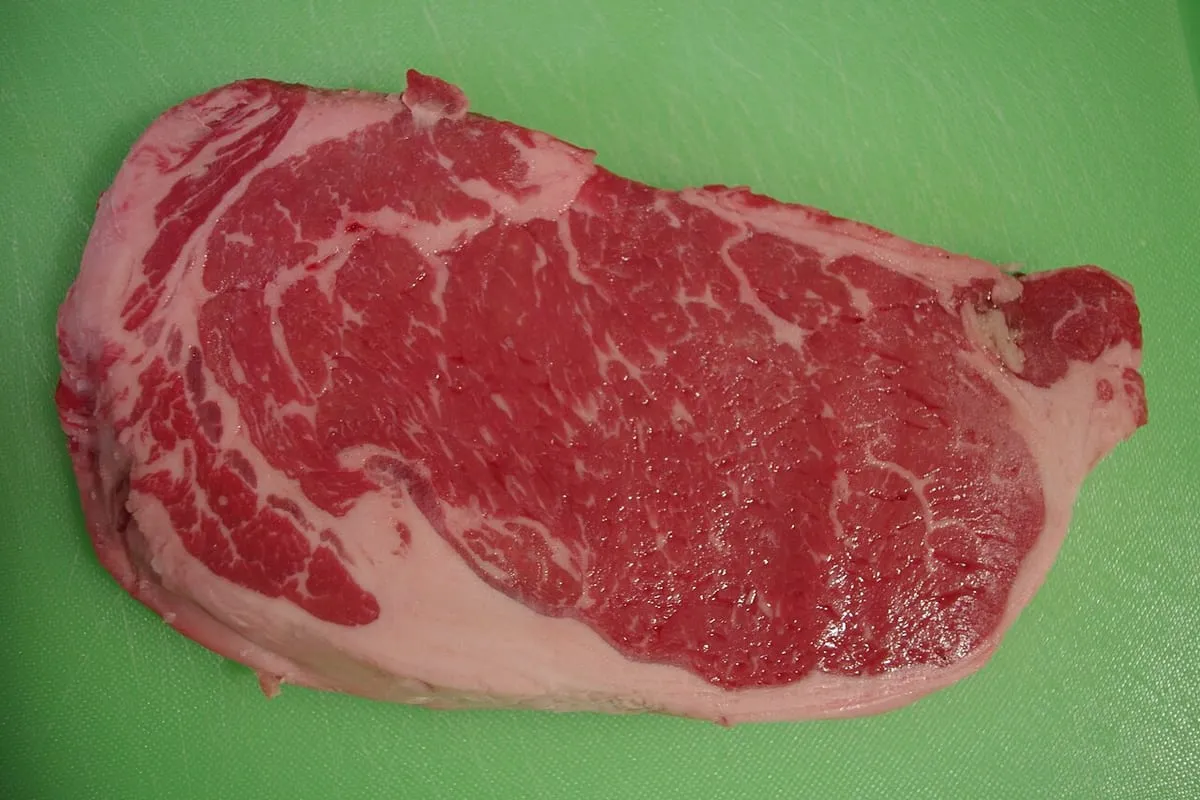

Our guide to foods that boost testosterone looks at oysters and other zinc-rich foods in more detail.
Does zinc increase testosterone? The human studies
When zinc is low, testosterone falls
A 1996 study is the one most often quoted. It had three parts:[1]
- 40 men aged 20 to 80. Men with more zinc in their cells tended to have higher testosterone.
- Four young men on a low-zinc diet. After 20 weeks of restricted zinc, their average testosterone fell from 39.9 to 10.6 nmol/L.
- Nine older men who were marginally zinc deficient. After 3 to 6 months of zinc supplements, their average testosterone rose from 8.3 to 16.0 nmol/L.
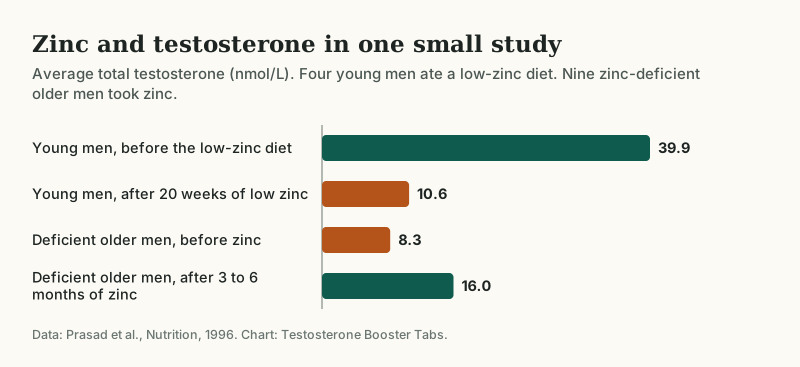
These are very small groups, and the published summary describes no placebo comparison for the supplement part.[1] But the pattern is consistent.
Does your starting level matter?
Yes. A 1981 study gave zinc to 37 men with long-standing infertility. In the 22 men who started with lower testosterone, testosterone rose. In the 15 men who started with higher testosterone, it did not change.[2]
Do zinc supplements for testosterone work when you get enough?
Two controlled trials tested ZMA in men who trained regularly.
- 14 healthy, regularly exercising men aged 22 to 33, whose diets already provided 11.9 to 23.2 mg of zinc a day, took ZMA. Their blood zinc went up. Their total and free testosterone did not change. The researchers concluded that ZMA has no significant effect on testosterone in men who eat a zinc-sufficient diet.[3]
- 42 weight-trained men took ZMA or a placebo during 8 weeks of training. There were no significant differences in hormones, body composition or strength.[4]
ZMA also contains magnesium, which we cover in magnesium and testosterone.
What the reviews say
A 2023 systematic review covered 38 papers, 8 in humans and 30 in animals. It concluded that zinc deficiency reduces testosterone and that supplementation improves it. It added that the size of the effect may depend on starting zinc and testosterone levels, the form and dose of zinc, and how long it is taken.[5]
What dose of zinc was used in the deficiency study?
The older men in the 1996 study took 459 micromoles of zinc a day as zinc gluconate, for 3 to 6 months.[1] That works out at roughly 30 mg of zinc. They were known to be marginally deficient. It is a study dose in deficient men, not a recommendation.
Can you take too much zinc?
Yes. More is not better with zinc.
- The NHS says taking high doses of zinc reduces the amount of copper your body can absorb, which can lead to anaemia and weakening of the bones. It advises against taking more than 25 mg of zinc supplements a day unless a doctor tells you to.[8]
- Excess zinc can interfere with the absorption of iron and copper, and high doses can cause nausea and vomiting.[9]
- MedlinePlus, from the US National Library of Medicine, says stomach symptoms most often start within 3 to 10 hours of swallowing a zinc supplement.[7]
Boosters are a common way to overdo it. In a study of 50 testosterone booster supplements, the products contained a median of 272% of the recommended daily amount of zinc, and some exceeded the official upper limit.[6] If you also take a multivitamin, the totals add up. See testosterone booster side effects for more on doses.
Do you need a zinc supplement?
Most men who eat a varied diet get enough.[8] If you are worried about your intake, or you have a condition or diet that might limit it, talk to a doctor or pharmacist.
Zinc is often sold alongside two other nutrients with weaker evidence still. In placebo-controlled trials, vitamin D did not raise testosterone, and boron has barely been tested.
If your real concern is low testosterone, start with low testosterone symptoms. A testosterone blood test answers the question directly. For habits with better evidence than any pill, see how to increase testosterone naturally.
The bottom line
Zinc matters for testosterone, but only up to the point of having enough. Correcting a real deficiency can raise testosterone. Taking extra on top of an adequate diet has not raised it in controlled trials, and high doses carry real risks. We rate zinc “only if deficient”.
Common questions
Does zinc increase testosterone?
It can if you are zinc deficient. A 2023 systematic review of 8 human and 30 animal studies concluded that zinc deficiency reduces testosterone and that supplementation improves it, with the size of the effect depending on starting zinc and testosterone levels.[5] In men with enough zinc, trials found no change.[3, 4]
Do zinc supplements for testosterone work if you are not deficient?
The trials say no. In 14 healthy men whose diets already supplied 11.9 to 23.2 mg of zinc a day, a zinc and magnesium supplement raised blood zinc but did not change total or free testosterone.[3]
Sources
- Zinc status and serum testosterone levels of healthy adults (Prasad et al., 1996) Nutrition
- Effect of zinc administration on plasma testosterone, dihydrotestosterone, and sperm count (Netter et al., 1981) Archives of Andrology
- Serum testosterone and urinary excretion of steroid hormone metabolites after administration of a high-dose zinc supplement (Koehler et al., 2009) European Journal of Clinical Nutrition
- Effects of Zinc Magnesium Aspartate (ZMA) Supplementation on Training Adaptations and Markers of Anabolism and Catabolism (Wilborn et al., 2004) Journal of the International Society of Sports Nutrition
- Correlation between serum zinc and testosterone: A systematic review (Te et al., 2023) Journal of Trace Elements in Medicine and Biology
- 'Testosterone Boosting' Supplements Composition and Claims Are not Supported by the Academic Literature (Clemesha et al., 2020) The World Journal of Men's Health
- Zinc in diet MedlinePlus, US National Library of Medicine
- Vitamins and minerals: Others NHS
- Zinc and Your Health The Nutrition Source, Harvard T.H. Chan School of Public Health
Part of our testosterone guides. New here? Start with do testosterone boosters work?