Yes, testosterone is a steroid. It is a steroid hormone that the body makes naturally, and when it is made as a drug it is classed, legally and medically, as an anabolic steroid.[1, 5]
The confusion comes from the word “steroid” being used for three different things. This guide separates them.
What does “steroid” mean?
“Steroid” is a chemical term. It describes a family of molecules built on the same carbon skeleton. Testosterone is classed as one of them: a steroid with 19 carbon atoms that acts as an androgen, or male-type sex hormone.[1]
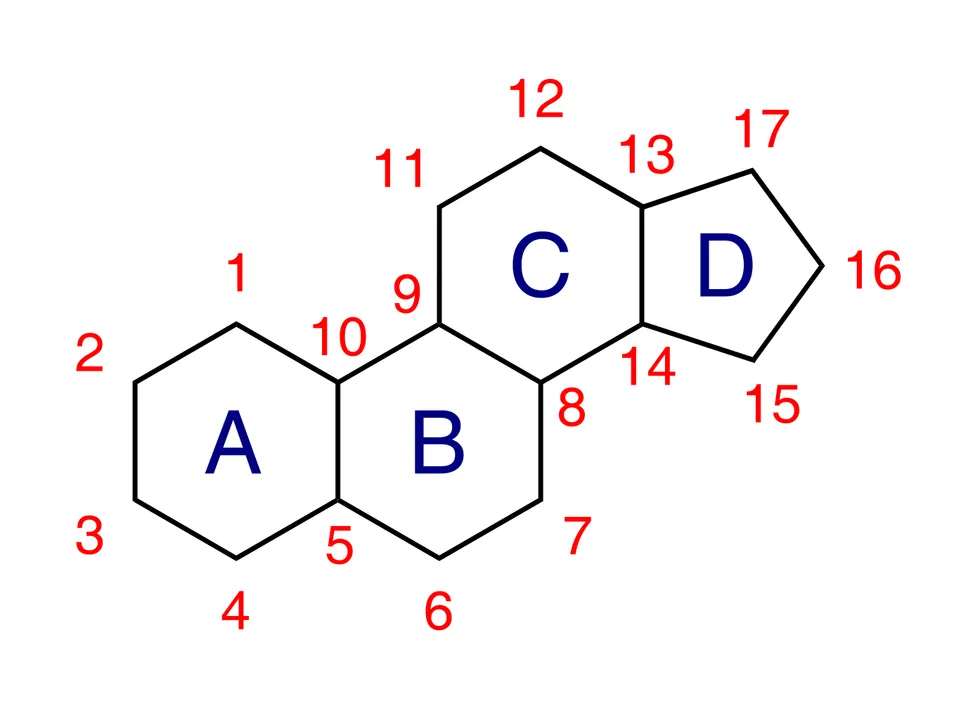

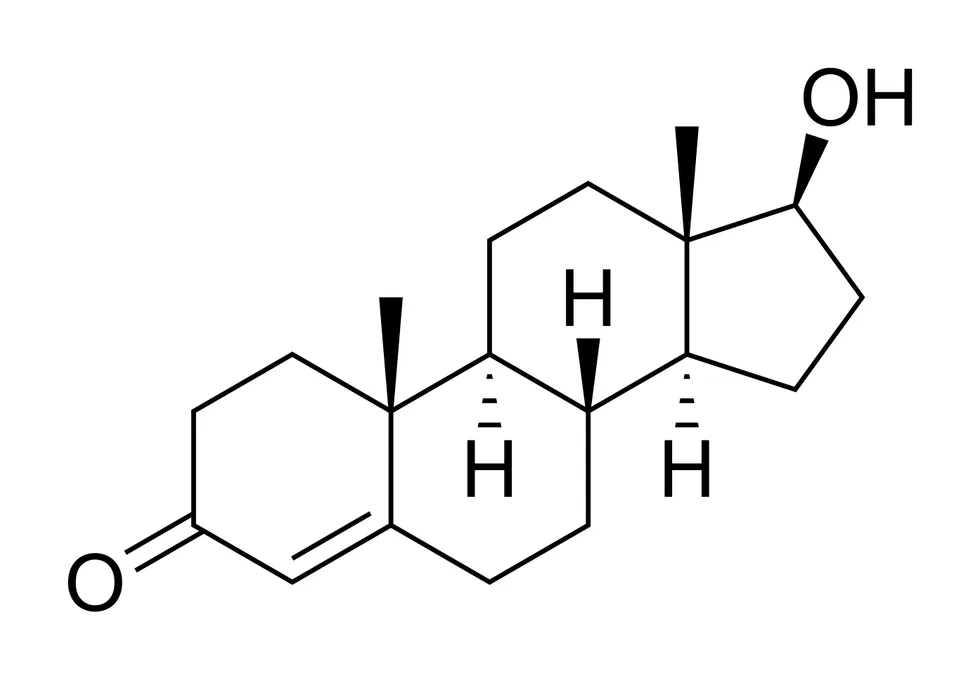

In everyday speech, though, “steroids” usually means one of two groups of medicines.
Anabolic steroids
Anabolic steroids are synthetic, man-made versions of testosterone.[2] Their full name is anabolic-androgenic steroids. “Anabolic” refers to building muscle, and “androgenic” to male sexual characteristics.[3]
Doctors use them to treat some hormone problems in men, delayed puberty, and muscle loss from some diseases.[2] Some people misuse them to build muscle or improve athletic performance.[6]
Corticosteroids
These are the “steroids” in asthma inhalers, eczema creams and arthritis treatments. They reduce inflammation and calm the immune system. The NHS is clear that they are not the same as anabolic steroids.[7]
So when a doctor prescribes “a short course of steroids” for a chest condition, it has nothing to do with testosterone.
Is testosterone an anabolic steroid?
Yes. Testosterone is the original that anabolic steroids are modelled on, and regulators count it as one.
- US law lists testosterone by name among the anabolic steroids.[5]
- The US Drug Enforcement Administration names testosterone as one of the anabolic steroids most commonly encountered by law enforcement.[4]
- The World Anti-Doping Agency lists testosterone under anabolic androgenic steroids.[8]
Is testosterone therapy “steroids”?
In a chemical and legal sense, yes: testosterone replacement therapy (TRT) is treatment with a steroid hormone. But it is very different from steroid misuse.
The purpose. In the US, testosterone products are approved for men who have low testosterone together with an associated medical condition.[9]
The dose. The Endocrine Society’s guideline suggests aiming for testosterone levels in the mid-normal range during treatment, with monitoring of blood levels.[10] People who misuse performance-enhancing drugs often take doses far above anything the body would make, and combine several drugs.[11]
The supervision. TRT involves regular blood tests and check-ups.[10]
The US National Institute on Drug Abuse draws the same line. In its report, “anabolic steroids” refers only to the non-prescribed use of testosterone and testosterone-like substances.[3]
We compare prescription treatment with supplements in testosterone boosters vs TRT.
Is testosterone a controlled substance?
In the United States
Yes. Anabolic steroids are listed in Schedule III of the federal controlled substances schedules, and the list includes testosterone.[5] MedlinePlus notes that using anabolic steroids without a prescription from a health care provider is not legal or safe.[2]
In the United Kingdom
Anabolic steroids are class C drugs that can only be issued by pharmacists with a prescription. The NHS says it is legal to have them for personal use, but illegal to possess, import or export them if it is believed you are supplying or selling them.[6]
In sport
Anabolic agents, including testosterone, are prohibited at all times under the World Anti-Doping Agency’s Prohibited List.[8]
Laws differ in other countries, so check the rules where you live.
What are the risks of misusing testosterone and other steroids?
MedlinePlus links the misuse of anabolic steroids, especially over a long time, with:[2]
- acne
- high blood pressure and changes in cholesterol
- heart problems, including heart attack
- liver disease and kidney damage
- mood changes such as irritability and aggression.
In men it can also cause baldness, breast growth, a low sperm count and shrinking of the testicles.[2] In women it can cause facial and body hair growth, a deepened voice and problems with periods.[6]
The NHS also warns that anabolic steroids are addictive, with withdrawal symptoms that include depression, tiredness and a decreased sex drive.[6]
An Endocrine Society scientific statement concluded that the health risks of these drugs are greatly underappreciated, and that most users are not athletes but recreational weightlifters.[11]
After stopping, the body’s own testosterone production can stay low for some time. A 2014 review found that symptomatic low testosterone is a potential consequence of steroid use and may depend on the dose, duration and type of steroid.[12]
More on the signs of excess in high testosterone in men and high testosterone in women. Baldness is covered in does testosterone cause hair loss?
Are testosterone boosters steroids?
No. Testosterone boosters are dietary supplements made from herbs, vitamins and minerals. A 2024 systematic review of 52 studies found that most do not raise testosterone.[15] See do testosterone boosters work?
There are two exceptions worth knowing.
- DHEA is a hormone that the body converts into testosterone and oestrogen. It is sold as a supplement in the US, where it was left out of the 2004 law that made other steroid precursors illegal to buy.[3] It is banned in sport.[8] See DHEA and testosterone.
- Hidden ingredients. Of 92 adulterated muscle-building supplements named in FDA warnings from 2007 to 2016, 89.1% contained synthetic steroids or steroid-like ingredients.[13] See testosterone booster side effects.
Is creatine a steroid?
No. A 2021 review by sports nutrition researchers states that anabolic steroids have a different chemical structure from creatine and a different legal status.[14] We look at the hormone question in does creatine increase testosterone?
Does exercise act like a steroid?
No. In a meta-analysis of 11 randomised trials, exercise training had a negligible effect on resting testosterone.[16] See does working out increase testosterone?
The bottom line
Testosterone is a steroid: a natural steroid hormone, and as a medicine an anabolic steroid and a controlled drug. That does not make prescribed testosterone therapy the same as steroid abuse. The difference lies in the diagnosis, the dose and the monitoring. It is also unrelated to the corticosteroids used for inflammation.
Common questions
Is testosterone a steroid?
Yes. Chemically it is classed as a steroid and an androgen.[1] Anabolic steroids are synthetic versions of it.[2]
Is testosterone therapy steroids?
Testosterone therapy uses a steroid hormone, and testosterone is legally classed as an anabolic steroid.[5] The difference from misuse is the purpose and the dose: therapy aims for the mid-normal range under monitoring.[10]
Is testosterone a controlled substance?
In the United States, yes. Testosterone is listed among the anabolic steroids in Schedule III.[5] In the UK, anabolic steroids are class C drugs available only on prescription.[6]
Are testosterone boosters steroids?
No. Boosters are dietary supplements made of herbs, vitamins and minerals, and most do not raise testosterone.[15] However, some muscle-building supplements have been found to contain hidden steroids.[13]
Is creatine a steroid?
No. A 2021 review by sports nutrition researchers states that anabolic steroids have a different chemical structure from creatine and a different legal status.[14]
Sources
- Testosterone (CHEBI:17347) ChEBI, European Bioinformatics Institute
- Anabolic Steroids MedlinePlus, US National Library of Medicine
- Anabolic Steroids and Other Appearance and Performance Enhancing Drugs (APEDs) National Institute on Drug Abuse (NIH)
- Steroids US Drug Enforcement Administration
- 21 CFR 1308.13: Schedule III US Code of Federal Regulations
- Anabolic steroid misuse NHS
- Steroids NHS
- The Prohibited List World Anti-Doping Agency
- Testosterone Information US Food and Drug Administration
- Testosterone Therapy in Men With Hypogonadism: An Endocrine Society Clinical Practice Guideline (Bhasin et al., 2018) The Journal of Clinical Endocrinology and Metabolism
- Adverse health consequences of performance-enhancing drugs: an Endocrine Society scientific statement (Pope HG et al., 2014) Endocrine Reviews
- Anabolic steroid-induced hypogonadism: diagnosis and treatment (Rahnema et al., 2014) Fertility and Sterility
- Unapproved Pharmaceutical Ingredients Included in Dietary Supplements Associated With US Food and Drug Administration Warnings (Tucker et al., 2018) JAMA Network Open
- Common questions and misconceptions about creatine supplementation: what does the scientific evidence really show? (Antonio et al., 2021) Journal of the International Society of Sports Nutrition
- Do "testosterone boosters" really increase serum total testosterone? A systematic review (Morgado et al., 2024) International Journal of Impotence Research
- Effects of Exercise Training on Resting Testosterone Concentrations in Insufficiently Active Men: A Systematic Review and Meta-Analysis (Potter et al., 2021) Journal of Strength and Conditioning Research
Part of our testosterone guides. New here? Start with do testosterone boosters work?